
Could Your Business Survive a Cyber Attack?
Cyber attacks are no longer just a threat to large corporations. Today, small and medium-sized businesses (SMBs) are among the most common targets for cyber criminals — and the consequences can be devastating.
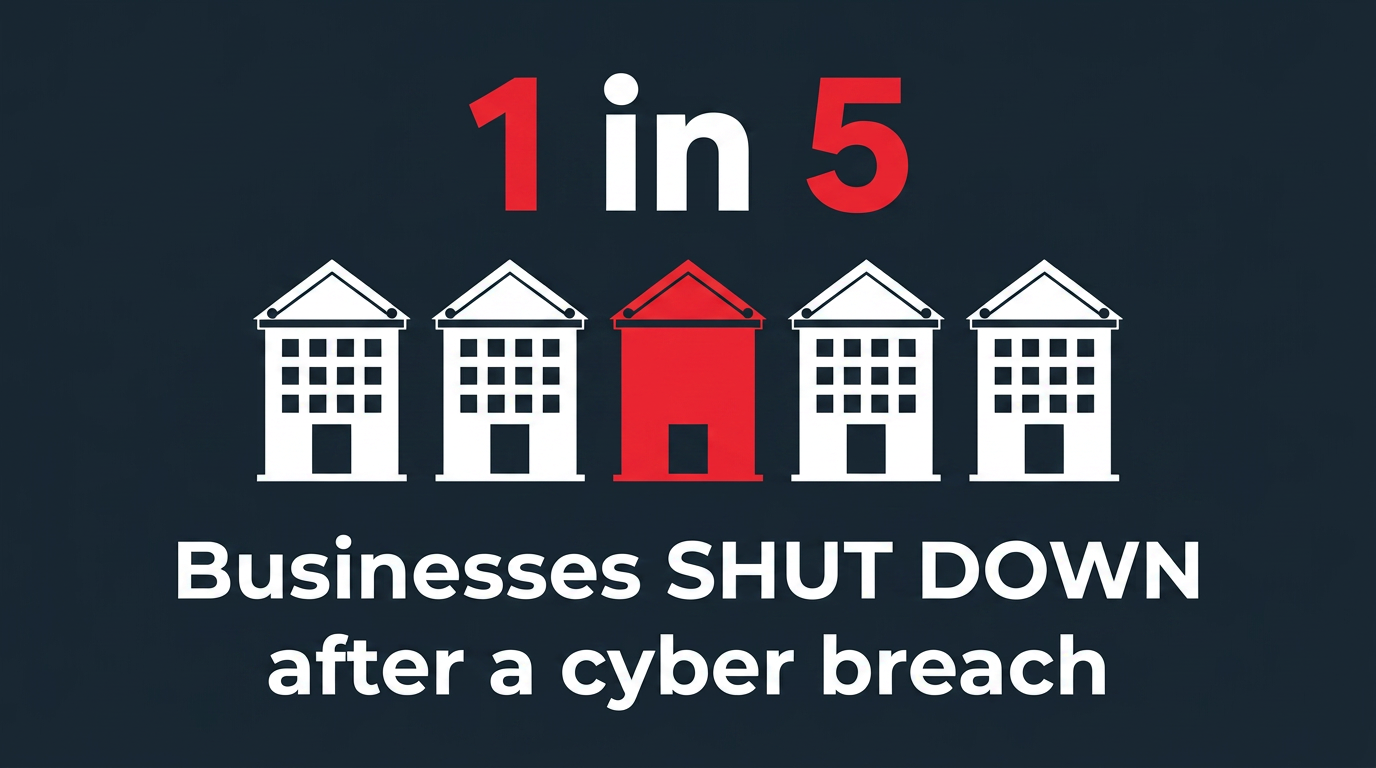
In fact, studies show that around 20% of small businesses close within 6 months of a cyber breach due to financial loss, operational disruption, and reputational damage.
The Harsh Reality: 1 in 5 Businesses Fail After a Cyber Breach
Would your business survive a cyber attack?
Why Small Businesses Struggle to Recover from Cyber Attacks
Large organisations often recover because they have the infrastructure and resources in place, including:
Dedicated IT departments
In-house cyber security teams
Disaster recovery strategies
Business continuity planning
Significant financial reserves
Specialist incident response support
However, most SMBs lack these protections, leaving them highly vulnerable.
Common challenges SMBs face after a cyber breach:
Prolonged system downtime
Loss of critical files and data
Staff disruption and productivity loss
Complete operational shutdown
Loss of revenue
High emergency recovery costs
Even a few days of downtime can cause serious long-term damage.
The Hidden Costs of Cyber Attacks on Businesses
The financial impact of a cyber attack is only part of the story. The long-term consequences often include:
Loss of customer trust
Cancelled or delayed contracts
Reduced supplier confidence
Slower sales pipelines
Reputational damage
Declining future revenue
For many businesses, rebuilding trust takes far longer than restoring systems.
“We’re Too Small to Be Targeted” – A Dangerous Myth
One of the biggest misconceptions in cyber security is that only large organisations are targeted.
In reality, 43% of cyber attacks target small and medium-sized businesses.
Cyber criminals specifically target SMBs because they often have:
Weaker security systems
Outdated software and infrastructure
Limited cyber security monitoring
Lack of staff training
Poor or non-existent backups
Minimal protection measures
Assuming “it won’t happen to us” is one of the biggest risks any business can take.
Why Large Companies Survive Cyber Attacks — And SMBs Often Don’t
Well-known organisations like:
Jaguar Land Rover
Marks & Spencer
CO-OP
have experienced cyber incidents — yet they continue operating because they have:
Advanced cyber security frameworks
Dedicated response teams
Strong financial backing
Comprehensive recovery plans
Most small businesses simply do not have these safeguards in place.
This is why cyber security for small businesses is critical — not optional.
Is Cyber Insurance Enough Protection?
Many business owners say:
“We have cyber insurance.”
While cyber insurance is important, it is not a replacement for strong cyber security.
Relying on insurance alone is like having home insurance but leaving your front door unlocked.
Ask yourself:
Do you have robust cyber security controls?
Are your systems actively monitored?
Do you use strong passwords and multi-factor authentication (MFA)?
Are your backups secure and regularly tested?
Are your devices protected?
Are your staff trained to recognise phishing attacks?
Do you have firewalls and endpoint protection?
Do you have proactive threat detection in place?
Without these measures, insurance providers may refuse to pay out after a breach due to inadequate protection.
The Importance of Proactive Cyber Security
Modern cyber threats require more than basic antivirus software. Businesses need proactive, multi-layered cyber security solutions, including:
Managed cyber security services
Endpoint Detection & Response (EDR)
Multi-Factor Authentication (MFA)
Microsoft 365 security protection
Secure, managed backups
Advanced email filtering and anti-phishing tools
Disaster recovery and business continuity planning
Staff cyber awareness training
24/7 monitoring and threat response
The goal is simple: prevent attacks before they cause damage.
Why Cyber Essentials Certification Matters
At Dolphin, we ensure our clients meet the Cyber Essentials and IASME standards, providing a strong foundation for cyber security compliance in the UK.
However, baseline security is only the starting point.
We recommend going further by implementing advanced, proactive security measures to defend against evolving cyber threats.
Final Thoughts: Is Your Business Truly Protected?
Cyber attacks are no longer a future possibility — they are happening every day to businesses of all sizes.
For SMBs, the consequences can be catastrophic.
Without the right cyber security strategy, backups, monitoring, and recovery plans in place, many businesses simply will not recover from a serious breach.
The question is no longer:
“Could this happen to our business?”
The real question is:
“If it happened tomorrow, would we survive it?”
Thinking About Your Cyber Security?
If this has raised questions about your current protection, our team can help you assess your risks and strengthen your cyber security — without disrupting your day-to-day business.